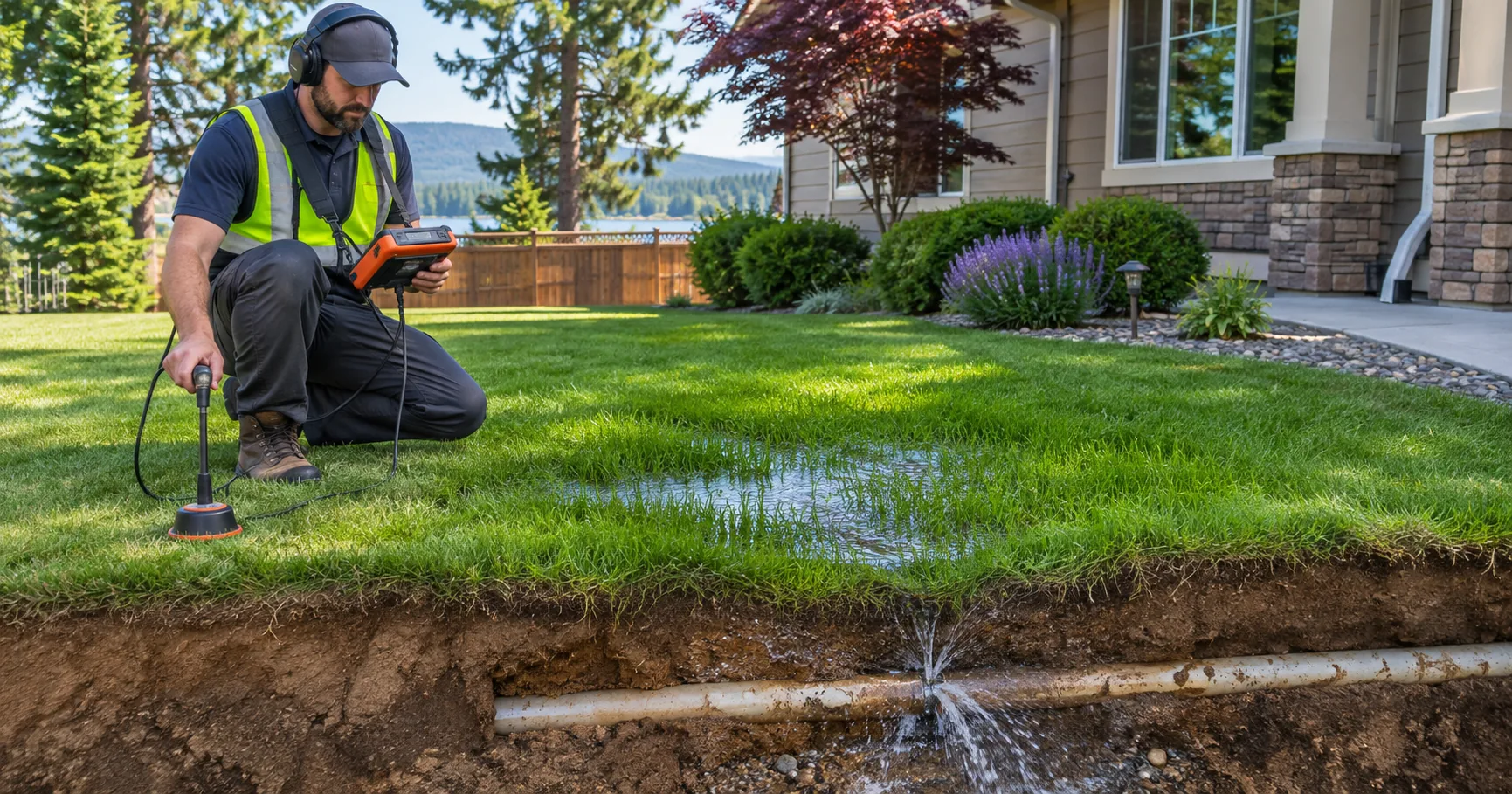
A wet patch in your yard might not seem like a big problem. Maybe it's from the sprinklers, recent rainfall, or melting snow.
But what if the ground stays wet when everything else has dried out?
An underground water leak can develop along a buried water supply line or irrigation pipe without producing an obvious puddle. Over time, the problem may increase your water bill, damage landscaping, or affect the ground around your property.
For homeowners in Post Falls, Idaho, knowing what to check can help you identify a possible leak before starting unnecessary repairs. If you suspect an issue along your main line, learning about water line leak detection in Post Falls can help you understand the diagnostic steps involved.
Here's how to recognize the warning signs, narrow down the source, and decide what to do next.
Can You Have an Underground Water Leak Without Seeing Water?
Yes. An underground water leak doesn't always create visible standing water.
Water escaping from a buried pipe can spread through surrounding soil, travel along utility trenches, or drain deeper underground.
Depending on the soil, pipe location, and size of the leak, you might notice only an unusually high water bill.
That's why visual inspections alone can't rule out a buried leak.
6 Signs of an Underground Water Leak in Your Yard
1. An Unexplained Increase in Your Water Bill
One of the earliest clues may be higher water consumption.
Compare your latest bill with the same month last year rather than only the previous month. Outdoor water use often changes between summer and winter.
If your household habits haven't changed but water usage has increased significantly, investigate possible leaks.
2. A Wet Spot That Never Seems to Dry
Walk around your yard and look for soil that remains unusually damp.
Pay attention to areas:
- Near the route of your buried water supply line
- Around sprinkler valves and irrigation pipes
- Along the foundation (which can also indicate a slab leak)
- Between the water meter and your home
A persistent wet patch may indicate a leak, although drainage problems, rainfall, and irrigation can produce similar symptoms.
3. One Area of Grass Looks Different
If one section of lawn is unusually green, grows faster, or stays soft while nearby areas are dry, extra underground moisture could be responsible.
However, a healthy-looking patch isn't proof of a water leak. Uneven sprinkler coverage and natural soil conditions can create similar patterns.
Look for multiple warning signs rather than relying on the appearance of grass alone.
4. Unexpectedly Low Water Pressure
A significant water supply leak can sometimes reduce pressure at fixtures inside your home.
If pressure suddenly drops throughout the house, check whether neighbors are experiencing the same problem.
Low pressure can also result from utility maintenance, a partially closed valve, or plumbing restrictions. It requires further investigation.
5. Soil Sinking or Small Depressions
Escaping water can sometimes displace soil and create soft or sunken areas.
Watch for new depressions, unstable ground, or unexpected erosion near the suspected pipe route.
Avoid walking or placing heavy objects on ground that appears unstable.
6. Your Water Meter Shows Usage When Nothing Is Running
Your water meter can provide an important clue even when no water is visible.
If water continues flowing through the meter while all fixtures and equipment are off, something may be consuming water unexpectedly.
That could be an underground leak, a running toilet, irrigation equipment, or another hidden water leak in your Post Falls home.
How to Check for a Possible Underground Leak
Before calling for professional help, there are several safe checks you can perform.
Step 1: Turn Off All Water-Using Fixtures
Make sure faucets, showers, washing machines, dishwashers, and other water-using equipment are not running.
Also turn off irrigation and automatic watering systems.
Remember that toilets, water softeners, and automatic appliances may use water without someone actively operating them.
Step 2: Check Your Water Meter
Locate your water meter if it is safely accessible.
Record the reading, avoid using any water for two hours, and check the reading again.
According to EPA WaterSense guidance, a changing reading during a period of no intentional water use suggests a possible leak.
For a detailed explanation, see our guide on How to Check Your Water Meter for a Leak in Post Falls.
Step 3: Check Your Irrigation System
If your property has sprinklers, inspect visible heads, valves, and accessible connections.
Look for:
- Broken sprinkler heads
- Constantly wet valve boxes
- Leaking hose connections
- Areas that remain wet between watering cycles
Irrigation components can be damaged by freezing temperatures, so inspecting the system when it is brought back into service is particularly useful.
Don't dig around a buried pipe simply because you suspect a leak.
Step 4: Use the House Shutoff to Narrow Down the Problem
If you know where your home's main water shutoff is and can operate it safely, turn it off after confirming that connected appliances and fixtures won't be affected.
Then check the water meter again.
If the meter still records flow, water may be escaping along the supply line between the meter and the house, or through an outdoor branch connected before the shutoff.
If meter activity stops, the source may be inside the house or downstream of that shutoff.
Important: Plumbing layouts differ, and not every shutoff isolates the same pipes. This test helps narrow down possibilities; it does not establish the exact leak location. Do not operate utility-owned valves or force a stuck shutoff.
Water Supply Leak vs. Sprinkler Leak: What's the Difference?
A buried supply line carries water toward your home. A sprinkler system distributes water to your landscaping.
Both can leak underground, but there are useful clues:
| Possible clue | Supply line | Irrigation line |
|---|---|---|
| Leak occurs all day | Possible | Possible |
| Water appears during watering cycles | Possible | More suggestive |
| Indoor pressure changes | Sometimes | Less typical |
| Meter records unexpected water use | Possible | Possible if metered |
| One sprinkler zone stays wet | Less suggestive | More suggestive |
This comparison is not a diagnosis. The exact plumbing arrangement determines which test will be useful.
What Should Post Falls Homeowners Do Before Digging?
If you suspect a buried water line is leaking, don't start digging randomly.
Idaho requires utility-location notification before covered excavation work. Contact 811 and follow the instructions and waiting period for your locate request.
There's another important detail: utility locators generally identify facilities owned by participating utility companies, not every privately owned line.
The water line between your meter and your home, along with private irrigation piping, may require a separate private locator. You can learn more through Idaho's Damage Prevention Board.
Professional pipe inspection and location and leak detection can help narrow down a suspected leak area before excavation or repair work begins.
Could Your Post Falls Water Bill Be Adjusted After a Leak?
This is something many homeowners don't realize.
The City of Post Falls publishes a Leak Refund Policy describing circumstances in which qualifying customers may request an adjustment for water lost through certain verified leaks.
Under the published policy, adjustments are considered case by case, with conditions involving repairs, documentation, and an insurance claim. An adjustment is not automatic.
Before assuming you qualify, contact your water provider to confirm the current policy and requirements.
For customers served by the City of Post Falls Water Division:
- Water Division Phone: 208-777-9857
- Official City of Post Falls Water Information
- Published Leak Refund Policy (PDF)
Not every Post Falls property receives water service directly from the city, so identify your actual water provider first.
When Should You Call a Professional?
Consider professional leak detection when:
- Your meter indicates unexplained continuous water use.
- The ground stays wet despite no recent watering.
- You cannot identify whether the problem is inside or outside.
- You suspect a buried service line is damaged (see our guide on why water lines leak in Post Falls).
- You want to narrow down the leak location before repairs.
Specialized leak detection equipment can help locate suspected underground leaks without relying solely on guesswork.
The exact method depends on the plumbing system and site conditions, and sometimes additional testing or limited excavation is still necessary.
Frequently Asked Questions
Can an underground water leak increase my bill without creating a puddle?
Yes. Water can drain through soil without reaching the surface. If your meter shows unexplained use, investigate even if the yard looks dry.
How do I know whether my sprinkler system is leaking?
Inspect sprinkler heads, valve boxes, and zones for unusual wetness. Where the system has an accessible isolation valve, a qualified professional may use it to help identify whether irrigation is involved.
Can freezing weather damage underground water pipes in Post Falls?
Freezing conditions can damage exposed or insufficiently protected piping and irrigation components. Winterizing outdoor systems and checking them after freezing weather can reduce the risk of undetected problems.
Who should I call about a water leak near my meter?
Contact your water service provider when the leak appears to involve utility-owned equipment or you're unsure who is responsible. For suspected privately owned buried piping, a leak detection professional can help assess the situation.
Do I need to dig up my entire yard to find the leak?
Not necessarily. Professional testing may narrow down a suspected location before excavation. However, some leaks still require exposing a section of pipe to confirm and repair the damage.
Protect Your Post Falls Property From Hidden Water Leaks
An underground leak isn't always obvious, and waiting for a large puddle can mean missing the earlier warning signs.
Start by checking your meter, reviewing your water consumption, and inspecting your yard and irrigation system.
If you still suspect a hidden leak, professional testing may help you identify where the problem is coming from.
Need help with a suspected underground water leak in Post Falls? Contact North Idaho Leak Detection to discuss your situation.
Call (208) 213-0533 or Contact Us online. Serving Post Falls, Idaho, and surrounding communities.